

Starting a laser engraving side business or serious hobby usually means navigating a confusing mix of laser types (CO2, fiber, diode, UV), power levels, and work area sizes without much guidance on what actually matches your materials and goals. Monport Laser built its catalog around organizing that decision clearly, offering laser engravers and cutters spanning desktop CO2 machines through industrial fiber and UV systems, each mapped to specific material types. After going through their full lineup, standout series, and — importantly — some genuinely serious safety considerations worth understanding before buying, here's a complete breakdown to help you decide if it's the right laser brand for your project or business.
Monport Laser positions its catalog around matching the right machine to the right material, backed by free and fast shipping, professional customer support, a 24-month warranty, and flexible payment options.
This is a genuinely helpful structure — rather than browsing generically, the site organizes machines both by laser type (Desktop CO2, Fiber, Industrial CO2, UV, Diode) and by material (Glass & Stone, Metal & Jewelry, Wood/Acrylic/Leather, Plastic & Delicate Materials), with a dedicated "Help Me Choose" tool for customers unsure where to start.
MEGAS 70W CO2 Laser Engraver. Marketed as the world's first smart 70W CO2 laser with a notably compact footprint, positioned as the brand's most affordable 70W option for small business use, with smart batch engraving and speeds up to 1,000 mm/s.
Reno Series (up to 65W, 24" x 16" work area). A creative-focused CO2 line featuring assisted autofocus with an 8MP HD camera, aimed at personalized gifts, décor, and general wood/acrylic/leather projects — genuinely positioned as an accessible starter series for creative studios and hobbyists.
Effi Series (up to 150W, 63" x 40" work area). The brand's high-speed, industrial-scale CO2 line with a built-in water chiller, reaching speeds up to 1,400 mm/s — a genuinely substantial step up in both power and work area for high-volume production needs.
GT Series (up to 200W, autofocus split fiber, MOPA-ready). An industrial galvo scanner system reaching speeds up to 20,000 mm/s, positioned for serious metal production and deep engraving work.
GA Series and GM Pro Series (integrated fiber lasers, autofocus, 3D color marking). Positioned respectively as more advanced color-marking-focused and everyday metal engraving workhorses — genuinely differentiated by feature depth (the GA's 90-degree rotating laser head) versus general ease of use (the GM Pro's everyday workflow focus).
Autoforge XPro (30W Fiber + 20W Diode Dual Laser). A genuinely distinctive dual-source machine letting one unit handle both metal marking and a broader range of other materials without needing two separate devices.
UV and UV Pro Laser Engravers. Specifically engineered for fine-detail, minimal-heat-impact work on delicate materials like plastics, crystal, and ceramics — addressing a real gap where CO2 or fiber lasers can be too aggressive for more sensitive surfaces.
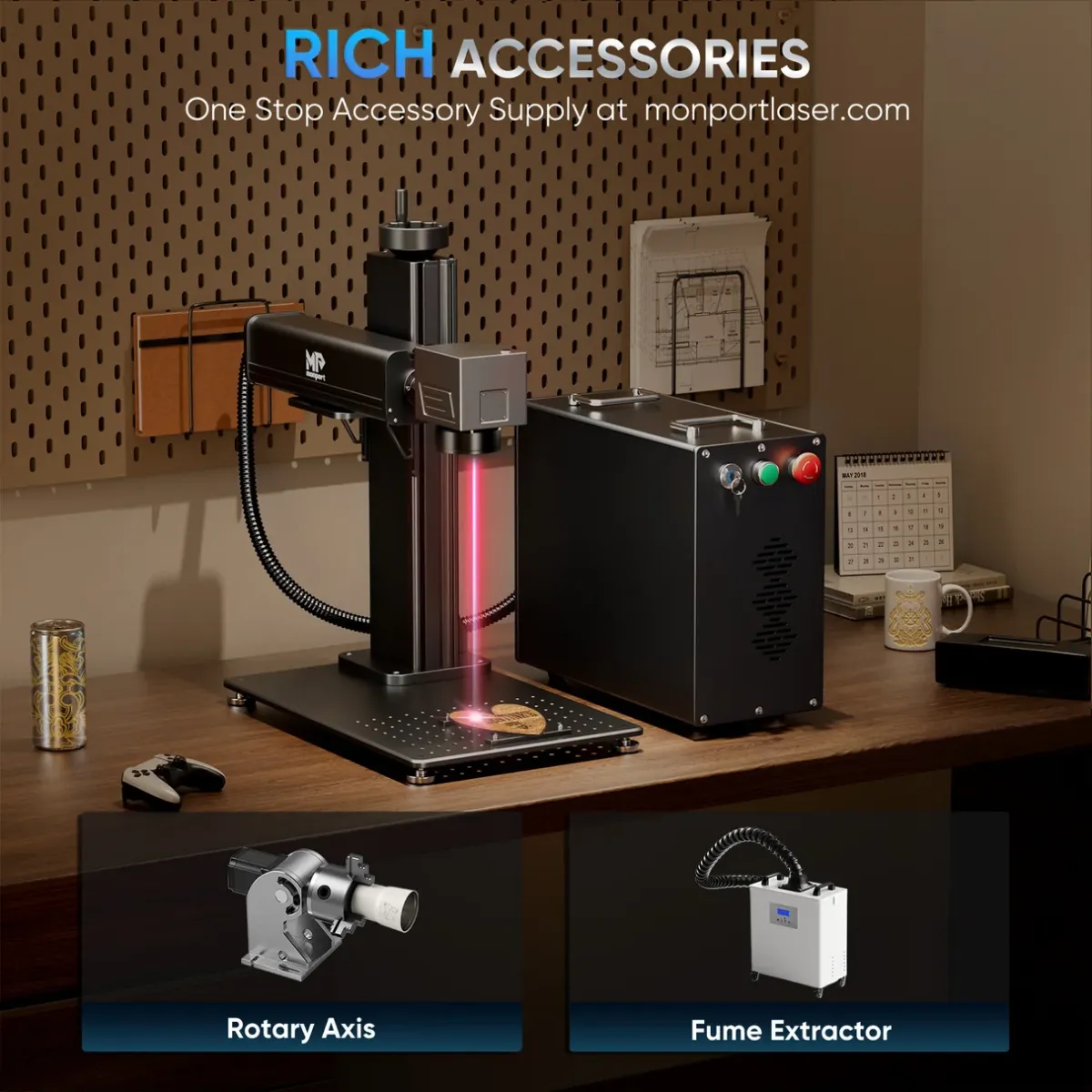
The accessories catalog is genuinely comprehensive and safety-relevant — water chillers, air purifiers, rotary attachments, laser tubes and power supplies, honeycomb working beds, flexible fixtures, and — critically — dedicated laser protective glasses matched to each laser type (CO2, Fiber, UV), plus fiber laser enclosures.
Monport backs purchases with a 24-month warranty (notably longer than the 1-year period common among competing laser brands), free and fast shipping, professional customer support with dedicated pre-sale and after-sale contact lines, buy-now-pay-over-time financing, and a real physical demo room customers can visit before purchasing. The brand also maintains an active Facebook community group and small business story features.
Feedback is generally positive and specific, with multiple reviewers praising responsive technical support during setup and configuration, describing the process as timely and accurate even for detailed questions. One reviewer specifically described building a seasonal side business around personalized game-day merchandise using their machine, while another specifically praised a machine's reliability and consistent results as a core part of their existing production process. At least one review specifically noted the printed manual for a newer machine could use updating, alongside otherwise positive setup and performance feedback.
This is worth taking seriously rather than treating as boilerplate: laser engravers and cutters — especially higher-powered CO2 and fiber systems in this catalog reaching up to 150-200W — are capable of causing serious eye injury and starting fires if used improperly. A few things worth understanding clearly before operating any laser cutter or engraver:
Never operate a laser without appropriate, laser-type-matched protective eyewear, even briefly, and even if the machine has a protective enclosure — stray reflections and direct beam exposure can cause permanent eye damage in a fraction of a second, and CO2, fiber, and UV lasers each require different, specifically rated protective glasses.
Never leave a running laser unattended. Laser cutting and engraving can ignite the material being worked on, particularly with certain woods, acrylics, and other flammable materials — it's important to actively monitor the machine throughout a job and have an appropriate fire extinguisher on hand.
Proper ventilation and fume extraction are not optional. Cutting and engraving many materials (particularly certain plastics, coated woods, and some acrylics) releases fumes that can be genuinely hazardous to breathe — a dedicated air purifier or proper external ventilation setup, matched to your specific machine and materials, is a real safety necessity, not just an accessory upgrade.
Know which materials are unsafe to cut or engrave at all. Certain materials (including PVC and some vinyl-based products) release genuinely dangerous compounds like chlorine gas when lasered — it's worth researching material safety specifically before working with anything you're not certain is laser-safe.
Check your local regulations regarding laser cutter operation. Depending on your location, there may be specific requirements around ventilation, fire safety, or even permitting for operating higher-powered laser equipment, particularly if running a business from a shared or residential space.
A genuinely well-organized, material-first catalog structure. Letting customers start from what they want to create rather than needing to already understand laser type differences meaningfully reduces the real complexity of this purchase category.
Real feature differentiation across the fiber laser lineup. Having distinct GA, GM Pro, and GT series with genuinely different feature depth (color marking, autofocus, rotating heads) reflects real attention to matching machine capability to actual production needs.
A distinctive dual-source option in the Autoforge XPro. Combining fiber and diode lasers in one machine is a genuinely practical solution for makers who need to work across metal and other material types without owning two separate devices.
A meaningfully longer warranty than typical competitors. A 24-month warranty period gives real, extended confidence for what's often a significant equipment investment.
Real, accessible pre-purchase support. Having both a physical demo room and responsive pre-sale technical contact reflects genuine investment in helping customers choose correctly before committing.
Consistent, credible customer feedback around support responsiveness. Multiple specific accounts of timely, accurate setup help reflect real, sustained customer service quality.
Take laser safety seriously from day one — this isn't optional accessory territory. As detailed above, proper eye protection, fire monitoring, ventilation, and material safety knowledge are genuinely essential for safe operation, not optional upgrades to skip to save money.
Choosing the right laser type and power matters enormously for your actual materials. Since CO2, fiber, and UV lasers each suit genuinely different material categories, it's worth using the "Help Me Choose" tool or contacting pre-sale support directly rather than guessing based on power output alone.
Work area size should match your actual typical project dimensions. Given the range spans from compact desktop units to 63" x 40" industrial work areas, it's worth confirming your typical material sizes fit comfortably rather than assuming a larger, pricier machine is always the better choice.
Higher-powered industrial machines represent a genuine investment requiring real workspace planning. Beyond just purchase price, it's worth planning for adequate ventilation, electrical requirements, and physical space before committing to one of the larger Effi or GT series machines.
Manuals and documentation can lag slightly behind newer machine releases. As reflected in at least one review, it's worth reaching out to support directly if a manual seems incomplete or outdated for a very new model.
If you're starting or scaling a laser engraving business or serious hobby, Monport Laser offers a genuinely well-organized, feature-differentiated lineup worth considering, backed by a longer-than-typical warranty and responsive pre-sale support. The combination of a material-first catalog structure, real feature differentiation across the fiber laser series, a distinctive dual-source machine option, and consistent positive support feedback makes it a strong option to explore — but please take the safety side seriously: proper eye protection, fire monitoring, ventilation, and material safety knowledge are genuinely essential every time you operate one of these machines, regardless of which model you choose.
👉 Shop the full Monport Laser engraver and cutter collection here