
Living somewhere cable and fiber providers simply don't reach — or spending significant time on the road in an RV or truck — usually means settling for expensive, capped, or genuinely unreliable internet options. Nomad Internet built its business around solving that specific problem, offering unlimited wireless internet plans designed for rural homes, travelers, and remote workers, with no contracts and no installation required. After going through their plans, practical setup process, and a substantial body of customer feedback, here's a complete, balanced breakdown to help you decide if it's the right internet provider for your situation.
Nomad Internet positions itself around simplicity and flexibility — no contracts, no data caps, and a plug-and-go setup designed to get rural households, remote workers, and travelers online where traditional providers fall short.
Nomad Unlimited Residential ($99.95/month). Designed for a single, fixed home location, positioned as a stable, everyday home internet solution for households and remote workers in areas without reliable cable or fiber access.
Nomad Unlimited Travel ($129.95/month). Built specifically for RVs, vans, or other mobile living situations, with the ability to pause and resume service when not actively traveling — a genuinely useful billing flexibility for seasonal or part-time travelers.
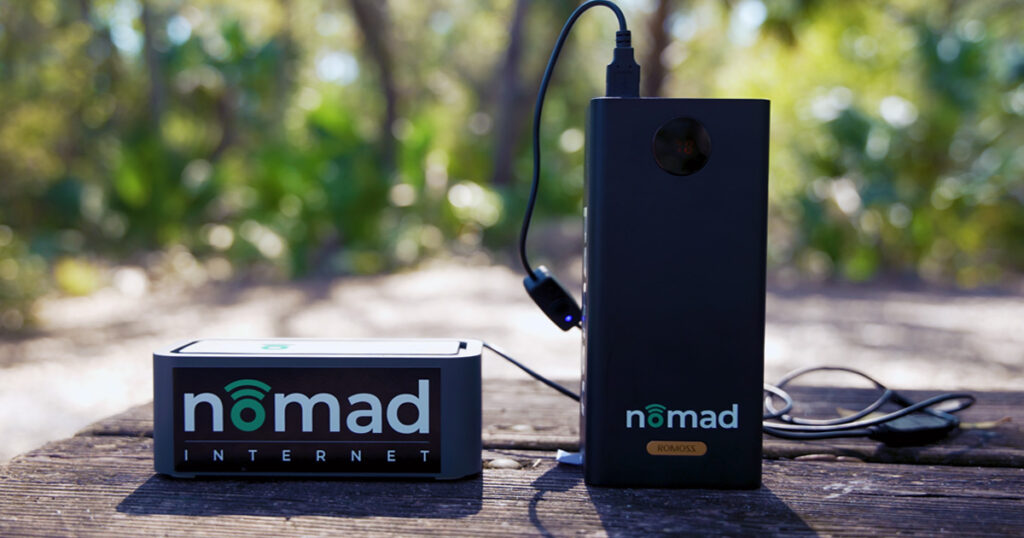
Beyond the core residential and travel plans, the brand offers dedicated hardware lines including Nomad Air (a portable hotspot device) and Nomad Raptor, alongside modem rental options — giving customers some choice in hardware matched to their specific mobility needs.
This is a genuinely simple, practical process by design — customers check coverage by ZIP code, the modem ships free and arrives ready to use, and setup is described as plug-and-go with no technician visit or installation appointment required. This addresses a real, practical barrier for rural customers who might otherwise face long technician wait times from traditional providers.
Nomad Internet backs plans with a 14-day money-back guarantee, no contracts (month-to-month with cancel-anytime flexibility), no credit check requirement, and a stated eco-friendly refurbished modem rental model aimed at reducing electronic waste.
The brand cites over 9,200 Google reviews at a 4.3-star average and more than 2,400 additional verified reviews at 4.7 stars, alongside media mentions from Forbes, CNET, Yahoo, and Medium, plus recognition from industry-adjacent outlets and a substantial YouTube presence from independent RV, off-grid, and rural-living content creators reviewing the service in real-world conditions.
Reviews are extensive and consistently describe a similar core experience: customers in genuinely underserved rural areas — the Appalachian foothills, rural New Mexico, upstate New York, deep East Texas — describing real relief at finally having usable, consistent internet after struggling with satellite providers, cellular hotspots, or no options at all. Several reviewers specifically reported measured speeds in the 25-155 Mbps range, sufficient for simultaneous streaming, gaming, and remote work across multiple devices, and multiple RV-specific reviewers specifically compared Nomad favorably against alternatives they'd tried, including satellite and other cellular-based solutions.
This is worth understanding clearly, as it's a common industry-wide dynamic rather than something specific to Nomad: services like this typically operate over existing cellular carrier networks rather than dedicated fiber or cable infrastructure. That means actual real-world speeds can vary considerably based on your specific location, time of day, and how congested the underlying cellular network is in your area — "unlimited data" generally refers to the absence of a hard data cap or overage fee, but it doesn't guarantee a specific speed at all times, particularly during high-usage periods or in areas with weaker underlying cellular coverage. It's worth using the 14-day trial period specifically to test real-world performance at your actual home or travel location before fully committing, rather than relying solely on the general speed ranges cited in reviews or marketing.
A genuinely practical, low-friction setup process. No technician visit and plug-and-go installation directly addresses a real pain point for rural customers who might otherwise face long wait times or high installation costs from traditional providers.
Real flexibility for both fixed and mobile use cases. Having distinct residential and travel-specific plans, including pause-and-resume billing for the travel plan, reflects genuine attention to how differently these two customer groups actually use the service.
A substantial, credible review base across multiple independent platforms. With over 11,000 combined reviews across Google and other verified sources, plus independent YouTube creator testing in real off-grid and RV conditions, there's meaningful third-party evidence beyond the brand's own marketing claims.
A genuinely low-risk trial structure. The 14-day money-back guarantee combined with no credit check and no long-term contract gives customers real room to test the service in their specific location before fully committing.
Consistent, specific positive feedback from genuinely underserved rural customers. The recurring pattern of customers in real rural and off-grid locations describing meaningful improvement over previous, unreliable options reflects genuine value for the brand's core target customer.
Actual speeds depend heavily on your specific location and network congestion, not just the advertised range. As discussed above, it's worth treating cited speed figures as illustrative rather than guaranteed, and using the trial period to test your own actual location's performance, particularly during peak usage hours in the evening.
"No throttling" claims are worth testing in your own real-world conditions. While the brand and multiple reviewers describe consistent, non-throttled performance even with heavy data use, individual experience with any cellular-network-based internet service can vary by carrier network capacity in your specific area — it's worth monitoring your own real-world performance during the trial period, especially for data-intensive uses like large game downloads or 4K streaming.
Coverage should be checked for your specific address, not assumed from general "nationwide" marketing. Since the service depends on underlying cellular network coverage, it's worth using the brand's specific ZIP-code coverage checker for your exact address rather than assuming nationwide marketing claims apply uniformly everywhere.
This is a rental modem model, not equipment ownership. Since modems are described as rentals rather than a customer-owned purchase, it's worth understanding the specific terms around modem replacement, protection plans, and what happens to the rented equipment if you cancel service.
Compare pricing and terms against your specific local alternatives. Since rural internet options vary considerably by exact location (satellite, other cellular providers, or potentially fiber expansion), it's worth comparing Nomad's specific plan pricing and terms against whatever alternatives are genuinely available at your address before committing.
If you live somewhere traditional cable or fiber internet doesn't reach, or you need reliable connectivity while traveling in an RV or van, Nomad Internet is a well-reviewed, genuinely practical option worth trying — especially given the low-risk 14-day trial and no-contract structure. The combination of a low-friction plug-and-go setup, flexible plans for both fixed and mobile use, a substantial and credible review base including independent real-world YouTube testing, and a genuinely risk-free trial period makes it easy to see why the brand has built a strong following among rural and traveling customers — just be sure to test actual real-world speeds at your specific location during the trial period, since performance on any cellular-network-based service can vary by area and network congestion regardless of the "unlimited" and "no throttling" marketing language.